In which we look at the theory and reality of time travel
THEY SAY THAT TIME WAITS FOR NO MAN. The march of time is merciless and ruthless; it dominates our lives from the moment of our birth until it drags us kicking and screaming to our graves. Trying to resist its relentless advance is like trying stop a tidal wave with an umbrella and a particularly absorbent hamster.
Like all uncontrollable forces, it has inspired generations of dreamers, authors and film-makers to imagine ways of taming and even manipulating the flow of time – to allow us to break free of our manacles and apply them to time itself. We could tame the flood and sail its waters upriver and visit the future or turn the boat around and revisit the past.
Yes, we’d have a lot of fun with time travel. Shame it’s just a wild fantasy... or is it?
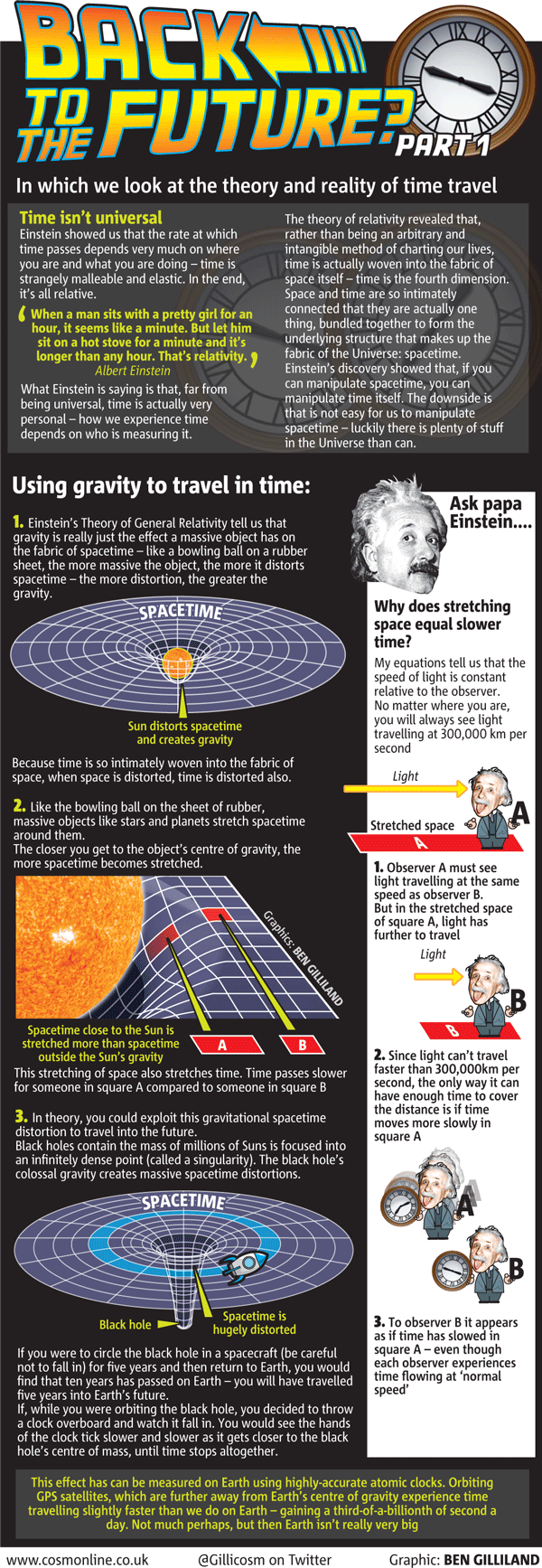
In the early 20th century, Albert Einstein came up with his theories of Special and General Relativity that, along with opening up a whole new world of science, revealed that time isn’t quite as immutable as we might think.
Now what about going back in time?
EVERY TIME YOU OPEN YOUR EYES and look at the world around you, you are looking back into the past.
Light travels at 300,000km per second, which is very fast, but because it has to travel from an object to your eyes, you are actually seeing that object as it appeared when the light left it – you are looking into the past.
Light travels so fast that, for nearby objects, the time delay is virtually nothing (about a billionth of second for an object one metre away), but the further away the object is, the longer light takes to make that journey and the further back in time you can look.
Light from the Sun has to cover a distance of 150 million km before it reaches our eyes here on Earth, so, we are seeing the Sun as it was about 8.4 minutes in the past.
One of the most distant star visible to the naked eye is V762 Cas in the Cassiopeia constellation. It is about 154 million billion km away, which is 16,308 light-years – this means we see this star as it was more than 16,000 years ago (when the light from this star began its journey, we humans were right in the middle of our stone age).
This is taken to extremes when you use a telescope. The most distant object modern telescopes can see is GRB 090429B a gamma ray burst whose light took 13.2 billion years to reach us.
So, with our eyes at least, we can travel back in time almost all the way back to birth of the Universe. But will it ever be possible to physically travel back in time?
Probably not – the technological and physical challenges are so huge that we may never advance enough to overcome them – but that doesn’t mean we can’t have fun dreaming about it. After all, flight was an unattainable dream when Leonardo Da Vinci sketched flying machines in his note books – but 400 years later, technology caught up with imagination and mankind took to the air...
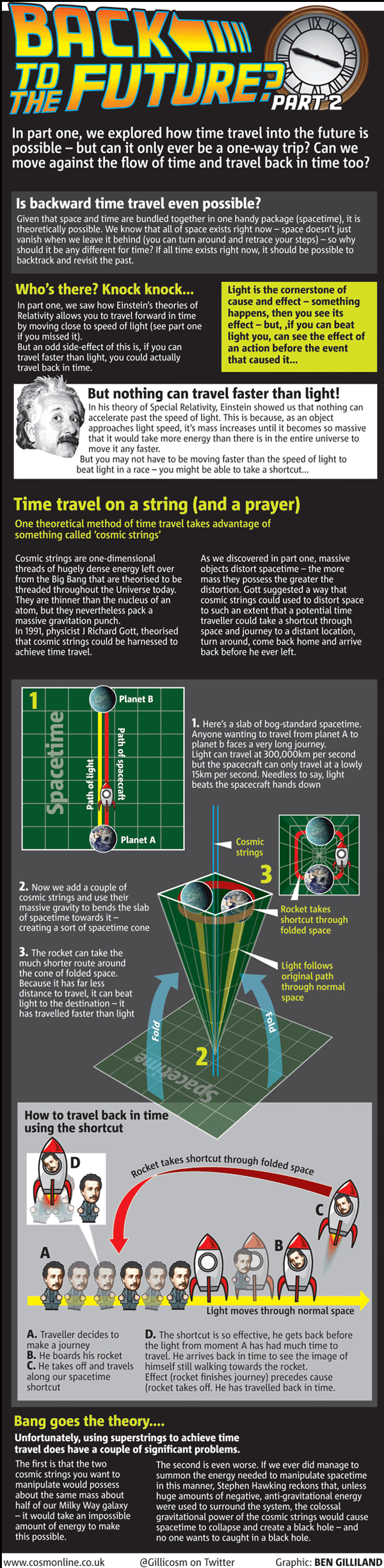

A potentially disturbing side-effect of this ‘all time exists already’ idea is that, just as the past is already written, so the future must be also. As we move through our lives, rather than writing the future as we go along, we are actually discovering what already lies ahead – our future might be preordained and, like characters written into a novel, all we can do is move through the pages of our pre-determined fate.